
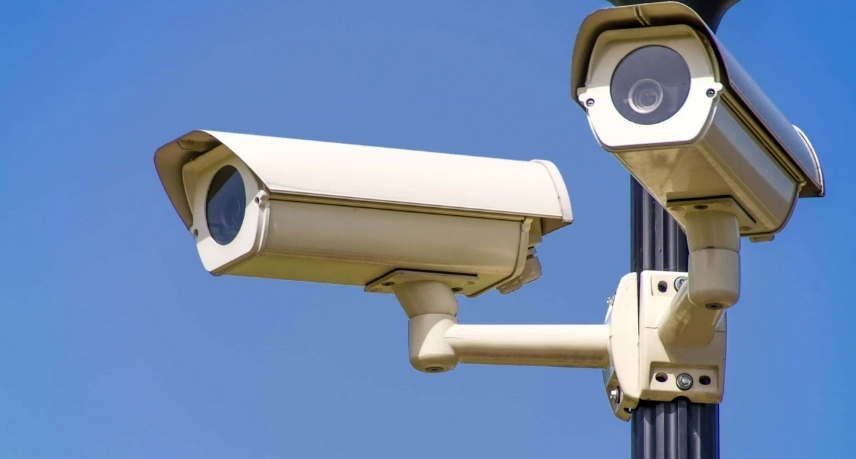
Closed-Circuit Television (CCTV)
Unlike broadcast television systems, CCTV does not transmit signals to the public but delivers video streams to specific monitoring and control points.
CCTV systems operate by capturing video through IP or analog cameras and transmitting the footage via wired (UTP, coaxial, fiber optic) or wireless network infrastructures to recording devices such as DVRs, NVRs, or HVRs, as well as monitoring displays. Advanced CCTV systems support high-resolution imaging (HD, Full HD, 4K), infrared night vision, motion detection, video content analytics (VCA), facial recognition, license plate recognition, and AI-powered event detection.
A modern CCTV infrastructure consists of cameras, lenses, recording units, PoE switches, network components, storage systems, and centralized video management software. Audio recording can be enabled through built-in or external microphones. With remote access capabilities, authorized users can monitor live feeds and review recorded footage via mobile applications or web-based platforms.
Beyond security purposes, CCTV systems play a vital role in operational monitoring, process optimization, and risk management. When integrated with alarm systems, access control, and building automation platforms, CCTV solutions form a comprehensive and intelligent security ecosystem.
Areas of Application for CCTV Systems
-
Traffic monitoring and management
-
Quality control in factories and industrial facilities
-
Security surveillance in offices, shopping malls, and commercial buildings
-
Operational monitoring in public transportation systems
-
Perimeter and outdoor security
-
Prevention of accidents, negligence, and unauthorized activities
-
Video monitoring in public venues, conferences, and event spaces
With continuous technological advancements, CCTV solutions are highly scalable and can be tailored to meet the specific needs of projects ranging from small businesses to large-scale campuses.