
Security and Burglar Alarm Systems
These systems not only generate alarms but also enable 24/7 monitoring and intervention through professional Alarm Receiving Centers (ARC).
Signals transmitted from the alarm panel to the ARC are evaluated according to the event type and directed to the property owner, security personnel, police, fire department, or emergency medical services. This service is typically provided on an annual subscription basis and includes continuous system monitoring, scheduled maintenance planning, and rapid technical support.
An alarm system is designed based on the physical layout, location, risk profile, user lifestyle, and budget of the protected area. Integrated electronic components form a centralized structure that detects abnormal conditions and triggers audible and visual alerts, while simultaneously notifying users and the ARC via automatic dialing or communication modules.
Detection functions include:
-
Door and window opening
-
Motion detection
-
Glass break and impact detection
-
Gas leakage, smoke, and high temperature detection
-
Panic, threat, and fire buttons
Alarm activation scenarios are defined according to user habits and site survey results, ensuring minimum false alarms and maximum response efficiency.
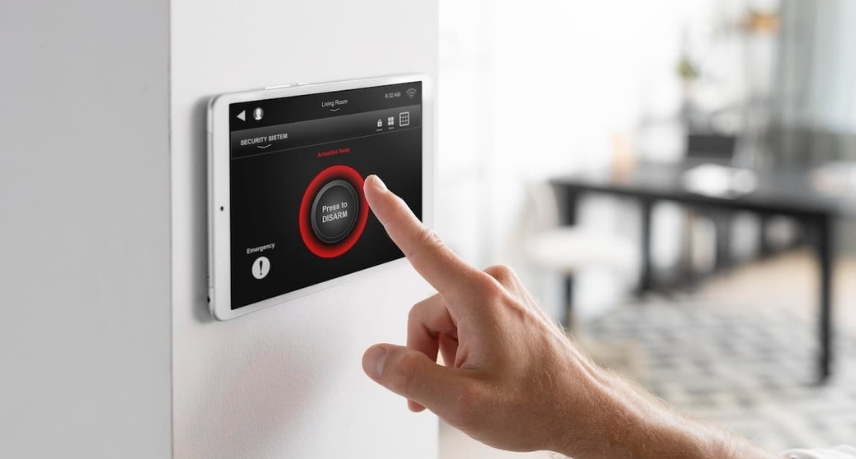
Users can arm and disarm the system via:
-
Keypads using secure PIN codes
-
Remote access through phone or mobile applications
-
Scheduled automatic arming/disarming
-
RF remote controls
Main Components of an Alarm System
-
Detectors and Sensors
PIR motion detectors, microwave detectors, IR barriers, magnetic contacts, glass break sensors, impact sensors, gas, smoke, and flood detectors continuously monitor the environment and trigger the panel upon detection. -
Alarm Control Panel
The core of the system, offering various configurations based on zone capacity, user count, keypad support, and accessory integration. Backup batteries ensure uninterrupted operation during power failures. -
Notification Devices
Sirens, flashers, telephone dialers, GSM/IP communication modules provide audible and visual alerts and are often equipped with anti-sabotage protection and backup power. -
Control Interfaces
LCD or LED keypads, RF remote controls, computers, and mobile devices enable full system management. -
Communication Infrastructure
Components may communicate via wired or wireless connections. In wireless systems, critical criteria include encryption level, rolling code technology, RF interference immunity, tamper alerts, battery status reporting, and periodic system health monitoring.
Advanced wireless systems can detect radio jamming attempts as sabotage events, ensuring secure and uninterrupted communication between all system components.